“A semicolon is used when an author could’ve chosen to end their sentence, but chose not to. The author is you, and the sentence is your life.”
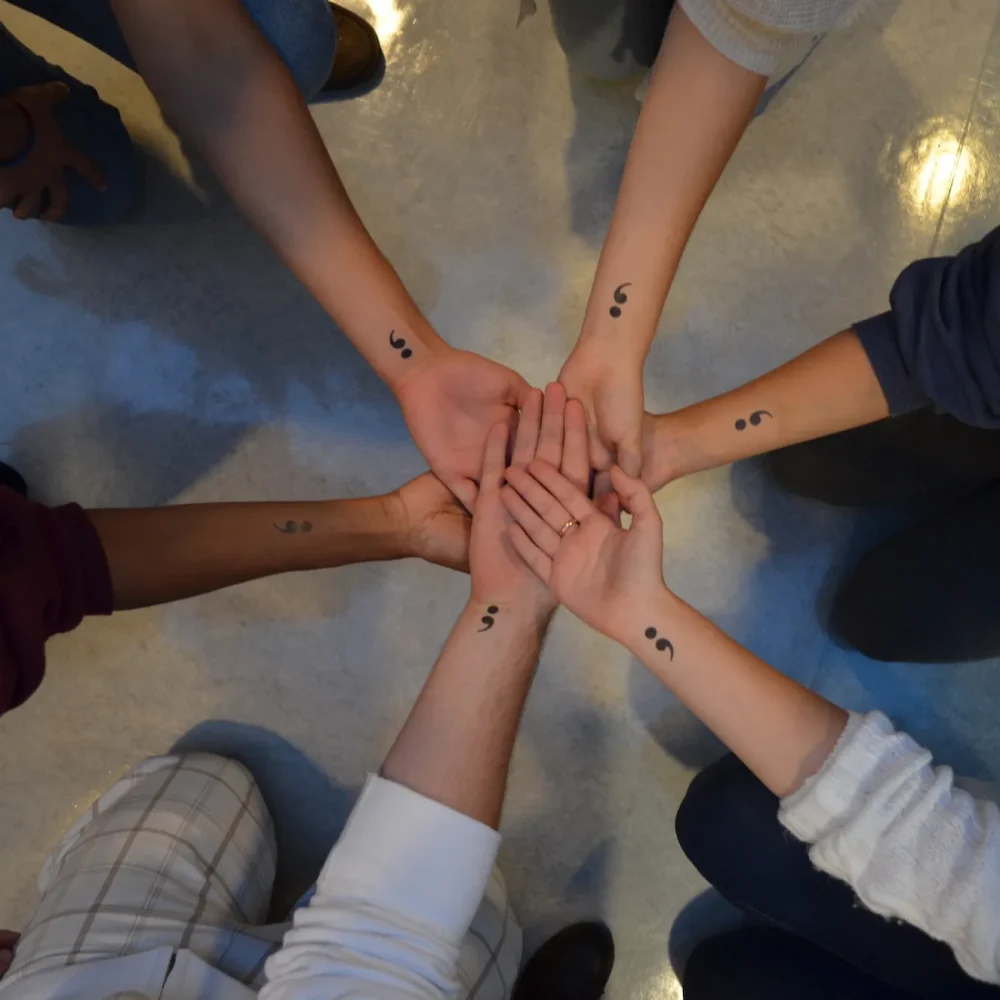
In 2013, Project Semicolon gained widespread attention when founder Amy Bleuel shared a photo of her semicolon tattoo on social media. The tattoo, which she had gotten in memory of her father, who tragically died by suicide when she was 18, became a powerful symbol of strength and survival. The semicolon represented a pause, not an end, echoing the message that people struggling with mental health challenges can keep going. The post resonated deeply with others, sparking a viral movement that quickly grew into an international campaign for mental health awareness, suicide prevention, and support for those facing emotional struggles.

In 2015, Project Semicolon took significant steps toward formalizing its mission. The organization developed its brand, solidifying its identity as a powerful symbol of mental health awareness and hope. That same year, Project Semicolon became an official nonprofit, expanding its ability to support mental health advocacy and suicide prevention efforts. Additionally, the organization opened its first office in Wisconsin, establishing a base of operations that would allow it to reach more individuals and communities. This pivotal year marked the beginning of Project Semicolon’s transformation into a globally recognized nonprofit dedicated to providing resources, fostering support, and reducing the stigma surrounding mental health.
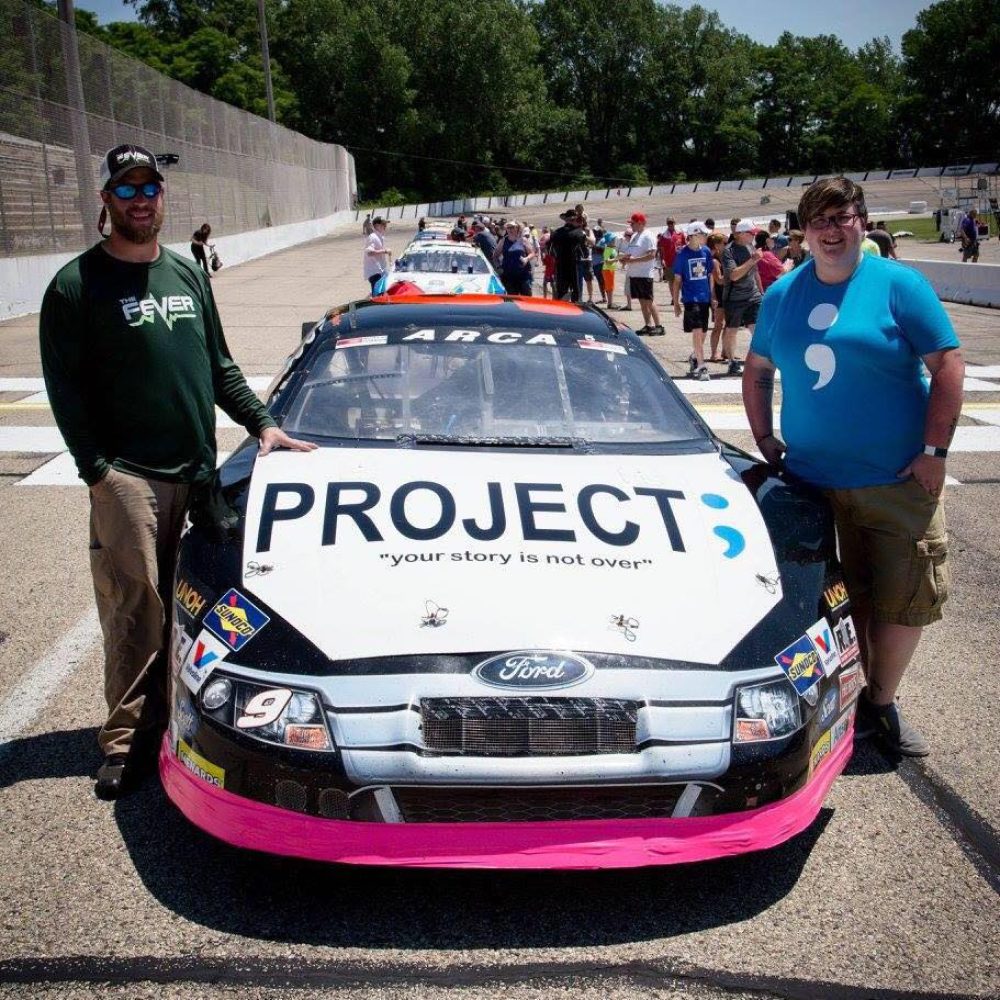
In 2016, Project Semicolon reached new heights of visibility by partnering with NASCAR. The organization was featured on a race car, which carried the Project Semicolon logo and its message of mental health awareness, reaching millions of viewers worldwide. This partnership allowed Project Semicolon to expand its impact, spreading its message of hope and support to a broader audience, including those who may not have previously been exposed to the cause. The collaboration with NASCAR helped raise awareness, reduce stigma, and connect individuals in need with the resources and encouragement they deserve.
In 2017, Project Semicolon reached an even wider audience through its inclusion in the hit Netflix series 13 Reasons Why, produced by Selena Gomez. The show, which focused on important mental health issues, prominently featured the semicolon symbol as part of its narrative, helping to bring the conversation about suicide prevention and mental health to the forefront. The collaboration with the series introduced Project Semicolon to a younger audience, many of whom connected with its message of hope and resilience. As part of the project’s involvement, Selena Gomez and the cast members got semicolon tattoos during filming, further solidifying their commitment to raising awareness and supporting the mental health community. This partnership played a key role in spreading the semicolon symbol to a global audience.
In 2017, Project Semicolon faced an overwhelming and heartbreaking loss with the passing of its founder, Amy Bleuel, to suicide. Amy had been the heart and inspiration behind the movement, representing hope, strength, and survival for countless individuals. Her death left the organization and the mental health community devastated, and it forced Project Semicolon to reflect on how best to continue supporting those in need during such a profound loss. Amy’s vision had brought light to so many, and her passing was felt deeply by those who had found strength and solidarity through the semicolon symbol. Despite this tragedy, her legacy continues with the original Project Semicolon team
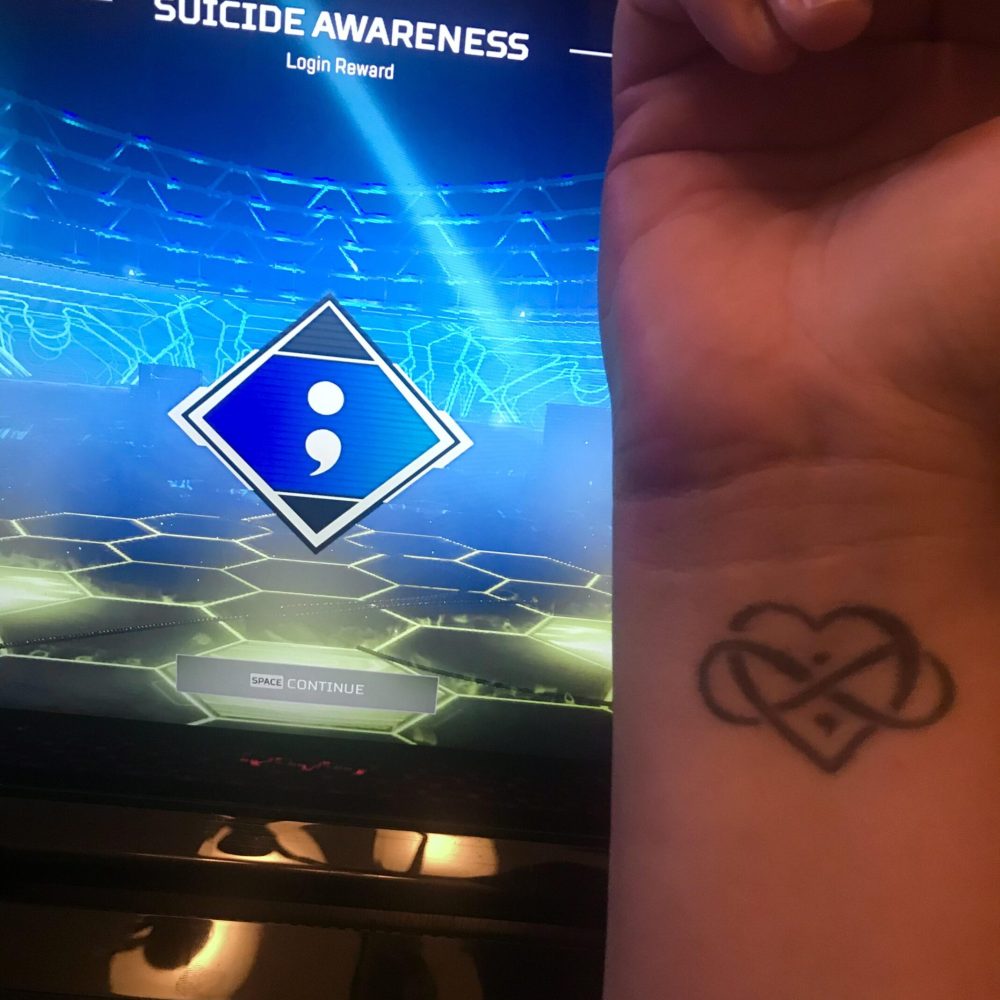
In 2022, Project Semicolon partnered with Respawn Entertainment to introduce a semicolon badge in the popular game Apex Legends. Millions of gamers downloaded the badge, which included information about mental health awareness and suicide prevention. This innovative initiative underscored the urgency of addressing rising youth suicide rates by meeting young people where they are—on platforms they engage with daily. Through this partnership, Project Semicolon extended its message of hope and resilience into the gaming world, empowering players to start conversations about mental health.
Project Semicolon support
Choose the closest answer. We will narrow the next step from there.
You’re here for yourself.
You do not need the clinical name for what you are feeling. Pick the closest place. We will keep the next step small.
This may be a place to start.
Start with depression support.
A few answers for the thoughts that make this harder to say out loud.
Feeling like a burden is a very common experience when someone is struggling emotionally. Depression and intense stress can distort how we see ourselves and our value to others. You might believe you're making life harder for the people around you, even when they care deeply about you. These feelings can be powerful, but they are not always an accurate reflection of reality.
When you're in deep emotional pain, the brain often loses the ability to imagine a better future. It can feel like the way things are now is how they will always be. But emotions, circumstances, and perspectives change far more often than our minds allow us to see during dark moments. Many people later look back and realize that the future was much bigger than the pain they were in at the time.
The Semicolon Journey checks multiple areas at once and builds a support path around what surfaces for you.
This may be a place to start.
Find support for dread, panic, and overwhelm.
A few answers for the thoughts that make this harder to say out loud.
This confuses a lot of people. From the outside, things might look okay, but inside you may feel overwhelmed, exhausted, or emotionally numb. Suicidal thoughts often come from internal pain, not just external circumstances. You might be carrying stress, depression, trauma, loneliness, or pressure that others simply can't see. Feeling this way doesn't mean your pain isn't real.
More people experience suicidal thoughts than most realize. During periods of intense stress, depression, trauma, or emotional exhaustion, the brain can start searching for ways to escape the pain. These thoughts are often a signal that something inside you is hurting deeply — not a sign that you actually want your life to end. Experiencing these thoughts doesn't make you broken or beyond help.
The Semicolon Journey checks multiple areas at once and builds a support path around what surfaces for you.
This may be a place to start.
Make the next step smaller.
A few answers for the thoughts that make this harder to say out loud.
This confuses a lot of people. From the outside, things might look okay, but inside you may feel overwhelmed, exhausted, or emotionally numb. Suicidal thoughts often come from internal pain, not just external circumstances. You might be carrying stress, depression, trauma, loneliness, or pressure that others simply can't see. Feeling this way doesn't mean your pain isn't real.
More people experience suicidal thoughts than most realize. During periods of intense stress, depression, trauma, or emotional exhaustion, the brain can start searching for ways to escape the pain. These thoughts are often a signal that something inside you is hurting deeply — not a sign that you actually want your life to end. Experiencing these thoughts doesn't make you broken or beyond help.
The Semicolon Journey checks multiple areas at once and builds a support path around what surfaces for you.
This may be a place to start.
Start without needing the perfect words.
A few answers for the thoughts that make this harder to say out loud.
This confuses a lot of people. From the outside, things might look okay, but inside you may feel overwhelmed, exhausted, or emotionally numb. Suicidal thoughts often come from internal pain, not just external circumstances. You might be carrying stress, depression, trauma, loneliness, or pressure that others simply can't see. Feeling this way doesn't mean your pain isn't real.
More people experience suicidal thoughts than most realize. During periods of intense stress, depression, trauma, or emotional exhaustion, the brain can start searching for ways to escape the pain. These thoughts are often a signal that something inside you is hurting deeply — not a sign that you actually want your life to end. Experiencing these thoughts doesn't make you broken or beyond help.
The Semicolon Journey checks multiple areas at once and builds a support path around what surfaces for you.
This may be a place to start.
Find immediate next steps and crisis options.
A few answers for the thoughts that make this harder to say out loud.
This confuses a lot of people. From the outside, things might look okay, but inside you may feel overwhelmed, exhausted, or emotionally numb. Suicidal thoughts often come from internal pain, not just external circumstances. You might be carrying stress, depression, trauma, loneliness, or pressure that others simply can't see. Feeling this way doesn't mean your pain isn't real.
More people experience suicidal thoughts than most realize. During periods of intense stress, depression, trauma, or emotional exhaustion, the brain can start searching for ways to escape the pain. These thoughts are often a signal that something inside you is hurting deeply — not a sign that you actually want your life to end. Experiencing these thoughts doesn't make you broken or beyond help.
The Semicolon Journey checks multiple areas at once and builds a support path around what surfaces for you.
You’re here because you’re worried about someone.
You do not have to know whether this is serious before you deserve guidance. Start with what you are noticing.
This may be a place to start.
Start with what you are noticing.
A few answers for the moments people are afraid of handling wrong.
Sometimes it's hard to know for certain, and that uncertainty itself can feel unbearable. The signs vary from person to person, but some of the most important include: withdrawing from people they love, giving away meaningful possessions, talking about being a burden or not wanting to be here, a sudden calm after a long period of depression, or increased talk of hopelessness. Not everyone shows obvious signs. If you have a feeling something is wrong, trust it enough to gently ask.
Warning signs can be behavioral, verbal, or emotional. Behaviorally: withdrawing from people, sleeping too much or too little, reckless behavior, researching methods of suicide, or giving things away. Verbally: saying things like "I'm a burden," "I wish I wasn't here," or "No one would care if I was gone." Emotionally: sudden calm after intense depression, persistent hopelessness, or extreme mood changes. No single sign confirms risk, but a pattern — especially combined with a recent loss or crisis — warrants attention.
The Semicolon Journey can help someone sort what is surfacing and build a support path around it.
This may be a place to start.
Find words that stay calm and close.
A few answers for the moments people are afraid of handling wrong.
Stay calm and stay with them. You don't need the perfect words — what matters most is that they feel heard. Try: "I'm really glad you told me that. Can you tell me more about what you're feeling?" Avoid minimizing ("Things aren't that bad") or problem-solving immediately. Just listen first. Let them know you take what they're saying seriously and that you're not going anywhere.
Avoid phrases that can unintentionally increase shame or shut down the conversation: "You have so much to live for," "Think about what this would do to your family," "You're being selfish," or "Other people have it worse." These responses — even when well-intentioned — can leave someone feeling more alone and misunderstood. Resist the urge to fix or reassure before you've truly listened.
The Semicolon Journey can help someone sort what is surfacing and build a support path around it.
This may be a place to start.
Understand distance without ignoring it.
A few answers for the moments people are afraid of handling wrong.
Sometimes it's hard to know for certain, and that uncertainty itself can feel unbearable. The signs vary from person to person, but some of the most important include: withdrawing from people they love, giving away meaningful possessions, talking about being a burden or not wanting to be here, a sudden calm after a long period of depression, or increased talk of hopelessness. Not everyone shows obvious signs. If you have a feeling something is wrong, trust it enough to gently ask.
Warning signs can be behavioral, verbal, or emotional. Behaviorally: withdrawing from people, sleeping too much or too little, reckless behavior, researching methods of suicide, or giving things away. Verbally: saying things like "I'm a burden," "I wish I wasn't here," or "No one would care if I was gone." Emotionally: sudden calm after intense depression, persistent hopelessness, or extreme mood changes. No single sign confirms risk, but a pattern — especially combined with a recent loss or crisis — warrants attention.
The Semicolon Journey can help someone sort what is surfacing and build a support path around it.
This may be a place to start.
Know what to watch for and when to act.
A few answers for the moments people are afraid of handling wrong.
Sometimes it's hard to know for certain, and that uncertainty itself can feel unbearable. The signs vary from person to person, but some of the most important include: withdrawing from people they love, giving away meaningful possessions, talking about being a burden or not wanting to be here, a sudden calm after a long period of depression, or increased talk of hopelessness. Not everyone shows obvious signs. If you have a feeling something is wrong, trust it enough to gently ask.
Warning signs can be behavioral, verbal, or emotional. Behaviorally: withdrawing from people, sleeping too much or too little, reckless behavior, researching methods of suicide, or giving things away. Verbally: saying things like "I'm a burden," "I wish I wasn't here," or "No one would care if I was gone." Emotionally: sudden calm after intense depression, persistent hopelessness, or extreme mood changes. No single sign confirms risk, but a pattern — especially combined with a recent loss or crisis — warrants attention.
The Semicolon Journey can help someone sort what is surfacing and build a support path around it.
This may be a place to start.
Use immediate support options.
A few answers for the moments people are afraid of handling wrong.
Sometimes it's hard to know for certain, and that uncertainty itself can feel unbearable. The signs vary from person to person, but some of the most important include: withdrawing from people they love, giving away meaningful possessions, talking about being a burden or not wanting to be here, a sudden calm after a long period of depression, or increased talk of hopelessness. Not everyone shows obvious signs. If you have a feeling something is wrong, trust it enough to gently ask.
Warning signs can be behavioral, verbal, or emotional. Behaviorally: withdrawing from people, sleeping too much or too little, reckless behavior, researching methods of suicide, or giving things away. Verbally: saying things like "I'm a burden," "I wish I wasn't here," or "No one would care if I was gone." Emotionally: sudden calm after intense depression, persistent hopelessness, or extreme mood changes. No single sign confirms risk, but a pattern — especially combined with a recent loss or crisis — warrants attention.
The Semicolon Journey can help someone sort what is surfacing and build a support path around it.
You’re here for a child or student.
Kids and teens do not always explain distress clearly. Start with the pattern you notice most.
This may be a place to start.
Help their body and mind settle safely.
A few answers for confusing, frightening, or easy-to-second-guess moments.
Take it seriously — every time, no matter how it's said. Stay calm, even though everything inside you may be screaming. Get to eye level, put down whatever you're holding, and listen without interrupting. Say: "I'm glad you told me that. I love you and I want to understand what you're feeling." Do not punish or minimize. Once they've talked, ask directly: "Are you thinking about hurting yourself?" Then get professional support as soon as possible.
Suicidal thoughts are more common in teenagers than most parents realize — but "common" does not mean something to dismiss. The adolescent brain is navigating enormous biological, social, and emotional change, and emotional pain in teenagers can be intense in ways that are genuinely difficult for adults to fully appreciate. Whether or not it's "typical" is less important than taking it seriously every time and connecting your child with proper support.
The Semicolon Journey can help sort multiple areas at once and point toward a support path.
This may be a place to start.
Respond without turning the moment into a fight.
A few answers for confusing, frightening, or easy-to-second-guess moments.
Take it seriously — every time, no matter how it's said. Stay calm, even though everything inside you may be screaming. Get to eye level, put down whatever you're holding, and listen without interrupting. Say: "I'm glad you told me that. I love you and I want to understand what you're feeling." Do not punish or minimize. Once they've talked, ask directly: "Are you thinking about hurting yourself?" Then get professional support as soon as possible.
Suicidal thoughts are more common in teenagers than most parents realize — but "common" does not mean something to dismiss. The adolescent brain is navigating enormous biological, social, and emotional change, and emotional pain in teenagers can be intense in ways that are genuinely difficult for adults to fully appreciate. Whether or not it's "typical" is less important than taking it seriously every time and connecting your child with proper support.
The Semicolon Journey can help sort multiple areas at once and point toward a support path.
This may be a place to start.
Look underneath the behavior for what may be wrong.
A few answers for confusing, frightening, or easy-to-second-guess moments.
Take it seriously — every time, no matter how it's said. Stay calm, even though everything inside you may be screaming. Get to eye level, put down whatever you're holding, and listen without interrupting. Say: "I'm glad you told me that. I love you and I want to understand what you're feeling." Do not punish or minimize. Once they've talked, ask directly: "Are you thinking about hurting yourself?" Then get professional support as soon as possible.
Suicidal thoughts are more common in teenagers than most parents realize — but "common" does not mean something to dismiss. The adolescent brain is navigating enormous biological, social, and emotional change, and emotional pain in teenagers can be intense in ways that are genuinely difficult for adults to fully appreciate. Whether or not it's "typical" is less important than taking it seriously every time and connecting your child with proper support.
The Semicolon Journey can help sort multiple areas at once and point toward a support path.
This may be a place to start.
Stay close without forcing them open.
A few answers for confusing, frightening, or easy-to-second-guess moments.
Take it seriously — every time, no matter how it's said. Stay calm, even though everything inside you may be screaming. Get to eye level, put down whatever you're holding, and listen without interrupting. Say: "I'm glad you told me that. I love you and I want to understand what you're feeling." Do not punish or minimize. Once they've talked, ask directly: "Are you thinking about hurting yourself?" Then get professional support as soon as possible.
Suicidal thoughts are more common in teenagers than most parents realize — but "common" does not mean something to dismiss. The adolescent brain is navigating enormous biological, social, and emotional change, and emotional pain in teenagers can be intense in ways that are genuinely difficult for adults to fully appreciate. Whether or not it's "typical" is less important than taking it seriously every time and connecting your child with proper support.
The Semicolon Journey can help sort multiple areas at once and point toward a support path.
This may be a place to start.
Use immediate support options.
A few answers for confusing, frightening, or easy-to-second-guess moments.
Take it seriously — every time, no matter how it's said. Stay calm, even though everything inside you may be screaming. Get to eye level, put down whatever you're holding, and listen without interrupting. Say: "I'm glad you told me that. I love you and I want to understand what you're feeling." Do not punish or minimize. Once they've talked, ask directly: "Are you thinking about hurting yourself?" Then get professional support as soon as possible.
Suicidal thoughts are more common in teenagers than most parents realize — but "common" does not mean something to dismiss. The adolescent brain is navigating enormous biological, social, and emotional change, and emotional pain in teenagers can be intense in ways that are genuinely difficult for adults to fully appreciate. Whether or not it's "typical" is less important than taking it seriously every time and connecting your child with proper support.
The Semicolon Journey can help sort multiple areas at once and point toward a support path.