

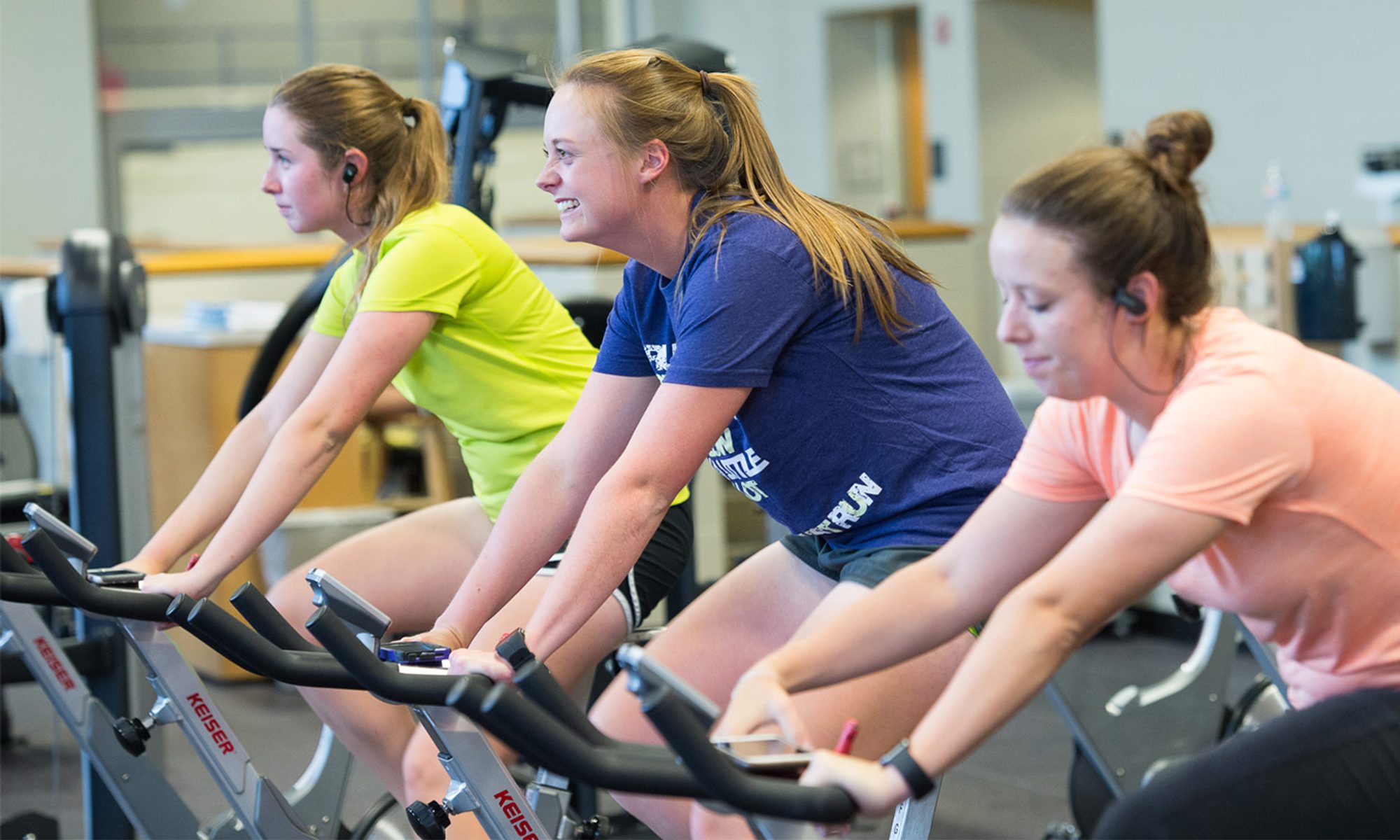
The gym can be one of the best places on campus.
You move after sitting all day. Your brain gets quieter. You build strength. You see familiar faces. You have one hour where nobody can ask you to join a committee.
It can also become a place where every mirror starts feeling like an evaluation.
Optimization is a very persuasive trap
College already teaches you to optimize everything.
Schedule.
Résumé.
GPA.
LinkedIn profile, somehow.
Your body can quietly become one more project.
More muscle. Less fat. Better macros. More steps. Faster time. Better definition. Better discipline.
There is always another metric available if you need one more reason to feel unfinished.
Exercise can support mental health without becoming your entire mental health
Movement can be useful for mood, stress and sleep.
But if missing one workout ruins your day, exercising through injury feels mandatory or your self-worth rises and falls with what you see in a mirror, something may be changing.
That does not automatically mean you have a disorder.
It does mean the relationship deserves attention.
Body image problems can become clinically serious
Some people become intensely preoccupied with perceived flaws in their appearance. Body dysmorphic disorder is not ordinary insecurity turned up slightly. It can consume significant time, cause distress and interfere with daily life.
Eating disorders can also involve body image, weight, food and compulsive behaviors, but they are not interchangeable conditions.
The point is not to diagnose yourself from a mirror.
It is to recognize when appearance concerns are taking over more of your life than you want to give them.
Compliments can accidentally feed the problem
Campus culture often rewards visible body change.
“You look amazing.”
“You’re so disciplined.”
“I wish I had your willpower.”
Those comments may land on somebody who is exhausted, restricting food, overtraining or deeply unhappy.
We rarely know enough about another person’s body to review it publicly.
There are thousands of other things to compliment.
Try asking what the routine gives you
Does the gym make your life bigger?
Do you leave feeling stronger, calmer or more connected?
Or does the routine increasingly shrink your life around food, appearance and exercise?
Can you rest when your body needs rest?
Can you eat with friends without needing to compensate later?
Can your body have a bad angle, a soft day, an injury or a change without it becoming a moral event?
Health is supposed to serve your life
Eating disorders can hide inside “healthy” campus culture, and body distress can hide there too.
The goal is not to become suspicious of exercise.
It is to leave room for movement to be movement instead of an endless argument with your body.
You are allowed to get stronger.
You are also allowed to stop treating yourself like a before photo.