

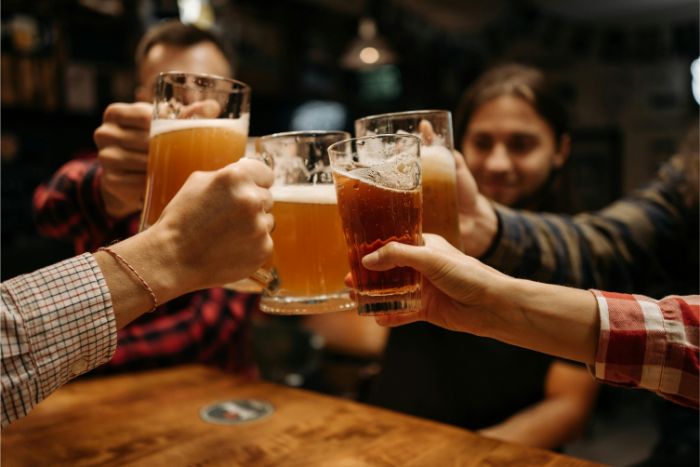
“Everyone drinks.”
It is one of those college sentences that can mean almost anything.
Sometimes it means, “Alcohol is common in my social circle.”
Sometimes it means, “Please do not make me look too closely at what is happening.”
Your friends are not a diagnostic tool
If everyone around you drinks heavily, comparison becomes nearly useless.
You can miss class because of drinking and think it is normal because your roommate did too.
You can black out and laugh about it because the group chat treats blackouts like stories.
You can spend money you do not have, get injured, lose pieces of nights or keep doing things you regret and still think, “At least I’m not the worst one.”
The better comparison is with your own life.
What is alcohol costing you?
Look for loss of control, not a stereotype
Alcohol use disorder does not require somebody to match a dramatic image of “an alcoholic.”
Patterns matter.
Drinking more or longer than intended.
Trying to cut back and repeatedly not doing it.
Spending a lot of time drinking or recovering.
Continuing despite problems with school, health, safety or relationships.
Needing more alcohol to get the same effect.
Feeling withdrawal when stopping.
You do not need every sign for alcohol to deserve your attention.
Consequences count even when nobody is mad at you
College can make external consequences seem like the only consequences.
No conduct violation?
No DUI?
No failed class?
Then maybe everything is fine.
But there are quieter costs.
The anxiety the next morning.
The sleep you never recover.
The relationship conversation you keep avoiding because you do not fully remember what you said.
The fact that sober socializing now feels strangely difficult.
The amount of mental energy spent deciding when you can drink again.
You are allowed to change before something terrible happens
A lot of people wait for a catastrophe because they assume concern has to be earned.
It does not.
You can decide you dislike the pattern.
You can talk to campus health, counseling or a substance-use provider.
You can ask a friend to do a sober weekend with you.
You can avoid the people or places that make changing nearly impossible.
You can notice that the pressure to keep up is shaping choices you do not actually want.
“Everyone” is usually smaller than it sounds
Not everyone drinks.
Not everyone drinks heavily.
Not everyone who seems comfortable with the culture actually is.
And even if everyone in your immediate circle did drink exactly the way you do, your health and safety would still belong to you.
Popularity cannot turn harm into harmlessness.
You do not need to become anti-alcohol.
You just need permission to be honest about your own relationship with it.